Decoding Bonus Activation Sequences Triggered by Transaction Options Within Mobile Account Frameworks

Transaction options within mobile account frameworks determine how bonus activation sequences unfold, with each payment method carrying distinct parameters that influence reward eligibility and timing. Developers design these systems so that credit card deposits, e-wallet transfers, and bank-initiated payments each map to specific trigger conditions stored in backend rule engines. As of July 2026, platform updates have refined these mappings to accommodate faster settlement speeds while maintaining compliance layers across regions.
Core Mechanisms Behind Sequence Triggers
Account frameworks register a transaction once the chosen method clears initial validation checks, then evaluate amount thresholds, frequency caps, and method-specific multipliers against stored bonus logic. Credit card entries often activate immediate sequences because they provide real-time authorization data, whereas bank transfers may delay activation until funds settle in the account ledger. Observers note that e-wallet options frequently insert an intermediate verification step that routes the transaction through additional security nodes before bonus logic executes.
Rule engines compare incoming transaction metadata against predefined activation trees, where leaf nodes represent individual bonus outcomes such as free credit tiers or wager multipliers. When a transaction matches multiple nodes simultaneously, the system applies priority weights established during framework configuration. Researchers have documented cases where high-volume accounts experience sequence branching that splits a single deposit into layered rewards across separate profile modules.
Regional Variations in Transaction-Bonus Mapping
Frameworks operating under different regulatory environments adjust trigger conditions accordingly, with North American platforms emphasizing transaction velocity limits and European systems incorporating value-based caps tied to local currency thresholds. Data from the Nevada Gaming Control Board shows that mobile frameworks updated in early 2026 introduced method-specific cooldown timers that reset only after both the deposit and its associated bonus clear compliance review. Australian regulatory filings indicate similar patterns where certain digital wallet transactions unlock accelerated sequences when paired with verified account profiles.
Those who manage cross-border accounts often encounter hybrid sequences that combine rules from multiple jurisdictions, resulting in conditional activations that require additional user confirmation steps before rewards post to the balance. Industry reports highlight that these hybrid paths reduce unintended activations while preserving the intended incentive structure for each payment route.
Profile Adjustments Triggered by Specific Options
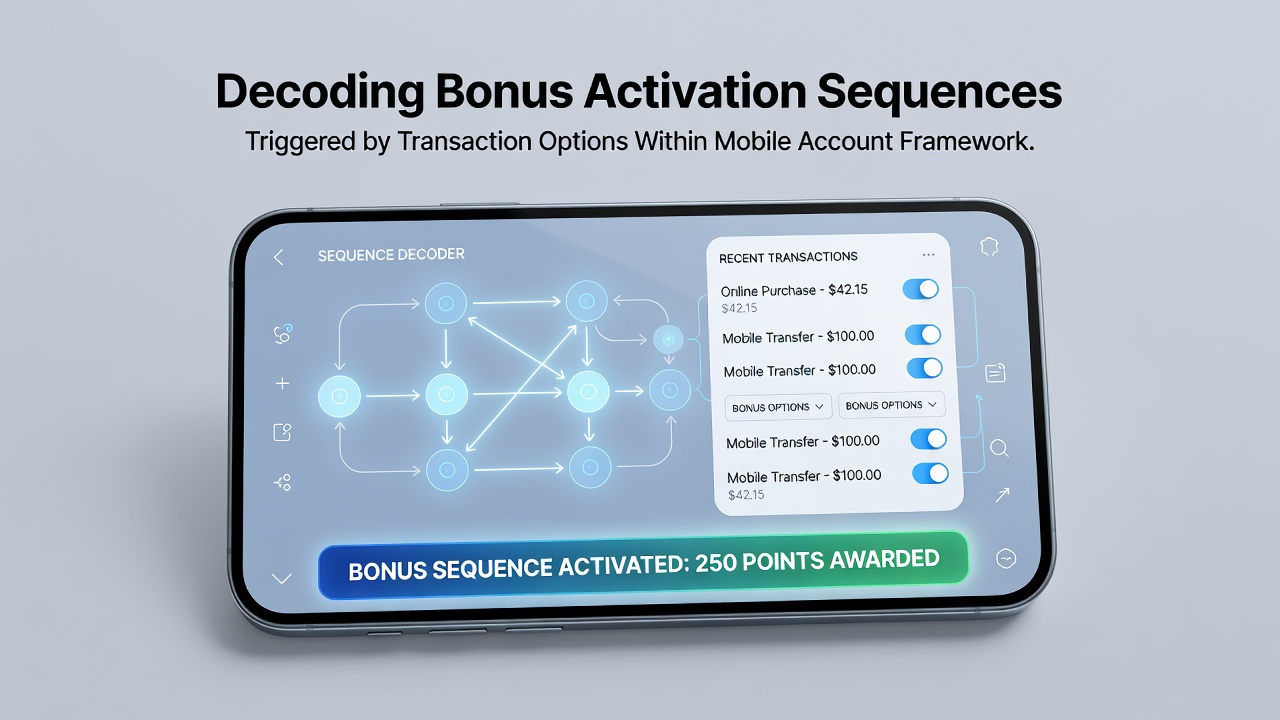
Once a transaction completes its primary validation, the framework updates profile flags that control subsequent bonus eligibility. A debit card deposit might toggle a short-term multiplier flag, while recurring bank transfers activate cumulative reward ladders that increment with each successful settlement. These flags reside in dedicated account modules that mobile applications query during every session load.
System logs reveal that certain transaction options also modify visibility settings for catalog items, granting temporary access to previously restricted content categories. The adjustments occur automatically when the activation sequence reaches completion, with rollback mechanisms available if the transaction later fails downstream reconciliation. Studies conducted by the University of Nevada, Las Vegas Gaming Innovation Lab have tracked how these profile shifts influence user navigation patterns within the same session.
Security Layers and Sequence Integrity
Mobile frameworks embed fraud-detection nodes directly into the activation pathway, evaluating device fingerprint data, IP geolocation consistency, and transaction velocity against historical account behavior. When anomalies appear, the sequence pauses at an intermediate checkpoint until manual or automated review clears the transaction. This checkpoint approach prevents premature bonus distribution while allowing legitimate high-value deposits to proceed once verification completes.
According to findings published by the Australian Institute of Criminology, frameworks that integrate these security layers experience fewer disputed activations compared with earlier versions that processed bonuses immediately upon deposit confirmation. The integration requires careful calibration so that security checks do not inadvertently block standard activation paths for verified users.
Future Framework Developments
Developers continue refining the mapping between transaction options and bonus sequences through iterative testing cycles that incorporate anonymized usage data. Planned updates scheduled for late 2026 aim to introduce predictive activation models that pre-stage potential rewards based on projected transaction patterns. These models will still require final confirmation from the transaction itself before any bonus posts to the account.
Conclusion
Transaction options serve as the primary input variables that determine how bonus activation sequences progress through mobile account frameworks, with each method producing predictable yet configurable outcomes based on embedded rule sets. Continued refinement of these systems supports both operational efficiency and regulatory compliance across diverse markets. The interplay between payment pathways and reward logic remains a central focus for platform architects seeking stable, transparent incentive structures.